This guide is for the moment when a result does not quite fit, or two types seem equally likely. It sets out a way to explore the question, one worked comparison, and the subtypes that often look like another type.
One reason Enneagram types can be confused is that behaviour is visible and motivation is not. Two people can do the same thing for different reasons, and a role or a difficult year can shape behaviour without any help from personality.
Subtypes add a second layer. Each type has three subtypes, formed when the type combines with a dominant instinct: Self-Preservation (SP), Social (SO) or One-to-One (SX). In each type one subtype, the countertype, behaves against the usual picture of its type and can look like another type. The comparisons here are interpretive, drawn from the model, not measured error rates.
Throughout, your own account of your motivation comes first.
The Considerate Helper and the Enthusiastic Visionary are both often warm, sociable, generous and upbeat. The difference the model points to is what the warmth is for.
Alex offers to organise a farewell event for a colleague, contacts everyone, plans a surprise and keeps spirits up. Two days before, the event is cancelled because the colleague's last day is moved. Alex feels flat for the rest of the week.
For a Considerate Helper, organising the event was a way of being close to people and of being the one who made it happen for them. The flatness may come from a gift that was never received: the effort was not seen, and nobody said thank you. Alex may find that hard to say aloud, because a Two's attention tends to go to others' needs first.
For an Enthusiastic Visionary, organising the event was exciting in itself: a plan full of possibilities, something good to look forward to. The flatness may come from the loss of that anticipated experience and the sudden limit on it. A Seven will often move quickly to a new plan, such as drinks instead.
Both readings fit the facts, and a real person may have some of each: Sevens can care about appreciation, and Twos can love planning. The subtypes blur the line further: the Social Seven, Sacrifice, is generous and service-minded and often looks like a Two, while the Self-Preservation Two, Privilege, can be charming, playful and more reluctant to do things for others, and can look like a Seven.
The answers are not a scoring key; they are material for a debrief.
A countertype shares its type's core motivation, fear and passion, but behaves against what people expect of the type. It is one possibility to consider when a description does not fit, not an explanation for every mismatch.
| Countertype | How it differs from its type | Mistaken for |
|---|---|---|
| SX1, Zeal | Expresses anger and frustration more directly, with a drive to reform people or society, where other Ones tend to hold anger in. | Often not recognised as a One, because Ones are expected to keep their anger in; sometimes taken for an Eight. |
| SP2, Privilege | Charming and a little shy, and can come across as youthful; wants to be looked after while resisting dependence, and is more reluctant to do things for others. | A Seven or a Six. |
| SP3, Security | Dislikes advertising achievements and avoids looking image-conscious, while still wanting recognition for hard work. | Often not recognised as a Three, because Threes are expected to promote their image. |
| SP4, Tenacity | Stoic; bears difficulty quietly and wants to be seen as resilient, where other Fours express their feelings more openly. | Often not recognised as a Four, because Fours are expected to be expressive. |
| SX5, Confidant | More open in close relationships than other Fives, seeking a partner who understands them and sharing their private world with that person. | Often not recognised as a Five, because Fives are expected to be distant; sometimes taken for a Four. |
| SX6, Intimidation | Bold and assertive; moves towards fear and danger instead of away from it. | An Eight. |
| SO7, Sacrifice | Generous and service-minded, putting their own wants aside for a group or person. | A Two. |
| SO8, Solidarity | Uses power and influence in the service of others; loyal and protective of their people. | A Two. |
| SO9, Participation | Leans in and works hard for the group, often as mediator or facilitator, and can overwork. | Often not recognised as a Nine, because Nines are expected to seek comfort and ease. |
The motivation stays with the countertype's own type. The SX6 still moves from fear, not the Eight's wish to avoid being controlled; the SO7 and SO8 serve others from their own type's motivation, not mainly from the Two's need to be liked and appreciated.
The explainer on why similar behaviour can come from different motivations covers five pairs of core types that are often confused. The research page explains what has been studied about the iEQ9: the published research covers the nine core type scales, and research at subtype level is planned.
Browse all 27 Enneagram subtypes, or take the iEQ9 to see your own nine-score profile.
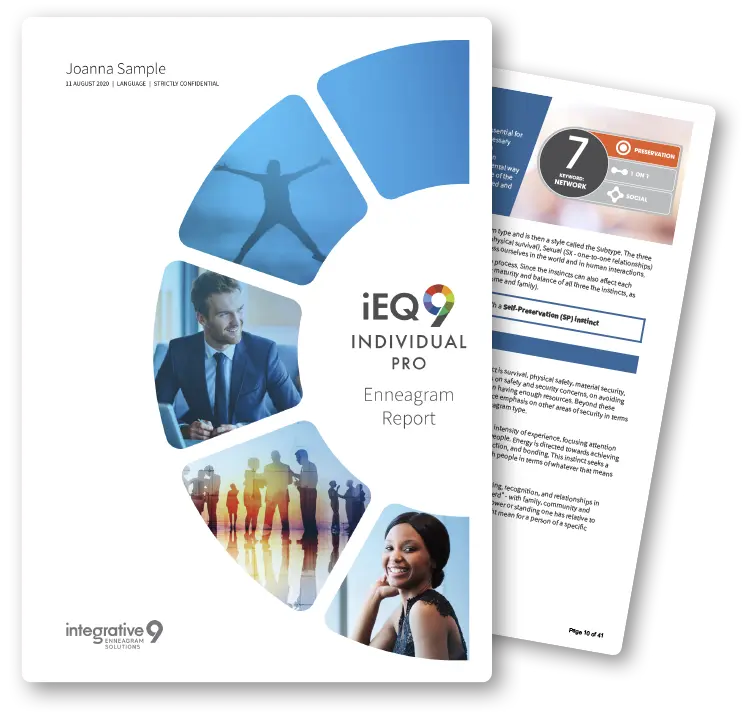
See your type, subtype and growth path in a personalised report. The iEQ9 is an intelligent, dynamically adaptive questionnaire: the questions change based on your answers, so each person answers 175 questions drawn from more than 2,000. It takes about 30 minutes, and your report covers your Enneagram profile, your subtype (one of 27), the Centers, the influence of both neighbouring wing types, Lines, Levels of Integration and six dimensions of Strain. Validated on 63,944 people across five languages. Reports from USD 60. Full refund within 30 days if you haven't opened your assessment link.
Get Your Enneagram Test
 What is the Enneagram?
 Introduction to the 27 Subtypes
 Introduction to the 3 Centers
 Wings
 Lines and Integration
 Enneagram History & Origin
 Type 8 - The Active Controller
 Type 2 - The Considerate Helper
 Type 5 - The Quiet Specialist
 Type 9 - The Adaptive Peacemaker
 Type 3 - The Competitive Achiever
 Type 6 - The Loyal Sceptic
 Type 1 - The Strict Perfectionist
 Type 4 - The Intense Creative
 Type 7 - The Enthusiastic Visionary
 Enneagram for Myself
 Enneagram for Practitioners
 Enneagram for Business
 iEQ9 Individual Reports
 iEQ9 Team Reports
 iEQ9 Questionnaire
 Training Events
 Level 1 iEQ9 Accreditation
 Level 2 Enneagram Team Dynamics
 International Enneagram Conference
 iEQ9 Community of Practice Events
 About Integrative9
 Meet the Faculty
 Testimonials
 Contact Us