


 One of the three subtypes of Type 2: The Considerate Helper
SP2 is the Self-Preservation subtype of Enneagram Type 2, the Considerate Helper, and the countertype of Type 2. Its key name is Privilege.
The shorthand joins an instinct to a type: "SP" is the Self-Preservation instinct and "2" is Enneagram Type 2. You will also see it written as "Self-Preservation 2" or "SP 2". It is one of the 27 subtypes in Dr Claudio Naranjo's model, which the iEQ9 uses.
This page describes that model. Read it as a prompt for reflection, not as a rule about any one person.
Twos have a motivational need to be liked and appreciated, and well-developed empathy. The Self-Preservation instinct turns attention to safety, well-being, and material and financial security. In the SP Two the wish for love and care is turned towards being looked after, while independence is closely guarded.
SP Twos tend to come across as warm, a little shy and charming, and others often feel moved to look after them. They want to be cared for but resist depending on anyone, hesitate over long-term commitments and responsibilities, and tend to withdraw when they feel or fear rejection. This model often places beneath this pattern a belief that one is not loved simply for who one is, an idea to explore rather than a fact about anyone.
The key name, Privilege, is shorthand for the wish to be favoured and looked after without having to ask. It does not mean entitlement.
In this model the passion of Type 2 is called pride. The word does not mean arrogance. It means a self-image built around being the one who gives rather than the one who needs, which makes one's own needs hard to admit. In the SP Two the needs are nearer the surface, but a direct request still feels risky.
In each type, one subtype behaves in a way that runs against the usual picture of the type. The motivation is the same; the expression differs. Twos are usually described as moving towards others to help. The SP Two is more reluctant to do things for others and would rather be cared for, so an SP Two may not recognise themselves in descriptions of Type 2 that centre on generous helping.
After a hard week, someone mentions twice at home that they are exhausted and there is nothing in for dinner. Their partner says "poor you" and carries on; later the first person goes quiet.
The partner may have missed the hint or be exhausted too, and the household may never have agreed who cooks. In the SP2 pattern, a wish to be looked after came out indirectly, so the missed hint felt like rejection. Neither reading proves that anyone does not care.
The useful move is a plain request: "Could you make dinner tonight? I'll do tomorrow."
All three subtypes share the Two's need to be liked and appreciated, and the same passion, pride. They differ in where that need is aimed.
The subtypes overlap. Many Twos will recognise something in all three descriptions.
The SP Two is often taken for less caring than other Twos, and may be mistaken for a Seven or a Six. A question that can help: is hesitation about commitment about keeping options open (Seven), about safety and trust (Six), or about the risk of needing someone and being let down (SP Two)?
Needing care is not evidence of the pattern. Illness, disability or financial hardship make asking for help appropriate for anyone. Equally, wanting to be cared for is human, not a flaw.
Next time you notice yourself hinting at a need, turn the hint into a direct request and offer something in return. Then notice what you felt before asking and after the answer.
This is an experiment to learn from, not a test of whether you are an SP2. Bringing balance to all three instincts is part of subtype work, and the instinct you use least is a useful place to begin. More on the core type is on the Type 2 Considerate Helper page.
Reading the descriptions is a good place to start, though subtypes overlap and no description settles it on its own. The iEQ9 reports your subtype alongside your core type. Take the iEQ9 individual assessment, browse all 27 Enneagram subtypes, or read the guide to types and subtypes that get confused. Published research covers the nine core type scales, and research at subtype level is planned.
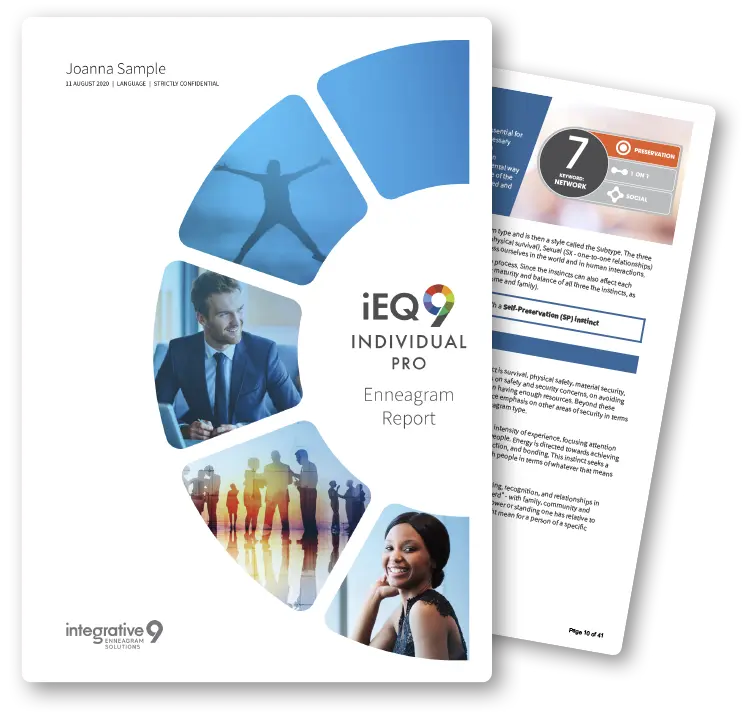
See your type, subtype and growth path in a personalised report. The iEQ9 is an intelligent, dynamically adaptive questionnaire: the questions change based on your answers, so each person answers 175 questions drawn from more than 2,000. It takes about 30 minutes, and your report covers your Enneagram profile, your subtype (one of 27), the Centers, the influence of both neighbouring wing types, Lines, Levels of Integration and six dimensions of Strain. Validated on 63,944 people across five languages. Reports from USD 60. Full refund within 30 days if you haven't opened your assessment link.
Get Your Enneagram Test

 What is the Enneagram?
 Introduction to the 27 Subtypes
 Introduction to the 3 Centers
 Wings
 Lines and Integration
 Enneagram History & Origin
 Enneagram for Myself
 Enneagram for Practitioners
 Enneagram for Business
 iEQ9 Individual Reports
 iEQ9 Team Reports
 iEQ9 Questionnaire
 Training Events
 Level 1 iEQ9 Accreditation
 Level 2 Enneagram Team Dynamics
 International Enneagram Conference
 iEQ9 Community of Practice Events
 About Integrative9
 Meet the Faculty
 Testimonials
 Contact Us
