


 One of the three subtypes of Type 8: The Active Controller
SO8 is the Social subtype of Enneagram Type 8, the Active Controller, and the countertype of Type 8. Its key name is Solidarity.
The shorthand joins an instinct to a type: "SO" is the Social instinct and "8" is Enneagram Type 8. You will also see it written as "Social 8" or "SO 8". It is one of the 27 subtypes in Dr Claudio Naranjo's model, which the iEQ9 uses.
This page describes that model. Read it as a prompt for reflection, not as a rule about any one person.
Eights want to be strong and to avoid showing vulnerability. The Social instinct turns attention to belonging, the group and a shared purpose. In the SO Eight the two combine: strength and influence are used on behalf of others.
SO Eights are loyal, protective and alert to injustice. They shield "their people" from harm, unjust authority or the abuse of power, and invite tough feedback from close allies. The cost appears when protection decides for someone what help they need, or when "their people" becomes a boundary that leaves outsiders unseen.
The key name, Solidarity, is shorthand for strength placed at the service of a group. It is not a summary of the whole person.
In this model the passion of Type 8 is called lust. The word does not mean sexual desire; it means an appetite for intensity and for more force, control and impact. In the SO Eight that appetite is redirected into the fight for others. The quality the model calls innocence is not naivety; it means meeting a situation freshly, without first bracing for a fight.
In each type, one subtype behaves in a way that runs against the usual picture of the type. The motivation is the same; the expression differs. Eights are usually described as rebellious and quick to assert their own needs. The SO Eight puts the same force into supporting others, so an SO Eight may not recognise themselves in descriptions of Type 8 that centre on dominance. The line is not absolute; fighting for others can meet the protector's own needs too.
In a team meeting, a senior colleague dismisses a junior member's proposal with a cutting remark. The team leader steps in firmly. Afterwards the junior colleague seems less grateful than embarrassed.
One reading is the SO8 pattern: a protective reflex that defended the person and, in doing so, spoke for them. Another is that in a team where seniority matters, being rescued in public carries its own cost.
The useful question, next time, is "Would you like me to speak, help you prepare, or stay beside you while you handle it?"
All three subtypes share the Eight's drive to assert their strength and avoid being controlled. They differ in where that drive is aimed.
The subtypes overlap. Many Eights will recognise something in all three descriptions.
Because their energy goes into supporting others, SO Eights can look like Type 2, the Considerate Helper. The useful question is what form the support takes: the SO Eight's tends to arrive as protection and confrontation, while Twos are described as needing to be liked and appreciated. Treat this as a question, not a rule.
Equally, standing up for others is not evidence of SO8: managers, parents and older siblings do it because it is their role. And protective strength is not more caring than a quieter style; it can be wrong about who needs protecting.
The next time you feel the pull to step in for someone, first ask what support they want: whether you should speak, help them prepare, or stand with them. Do what they ask, even if it is less than you wanted. Afterwards, notice what holding back cost you, and what it gave them.
This is an experiment to learn from, not a test of whether you are an SO8. Bringing balance to all three instincts is part of subtype work, and the instinct you use least is a useful place to begin. More on the core type is on the Type 8 Active Controller page.
Reading the descriptions is a good place to start, though subtypes overlap and no description settles it on its own. The iEQ9 reports your subtype alongside your core type. Take the iEQ9 individual assessment, browse all 27 Enneagram subtypes, or read the guide to types and subtypes that get confused. Published research covers the nine core type scales, and research at subtype level is planned.
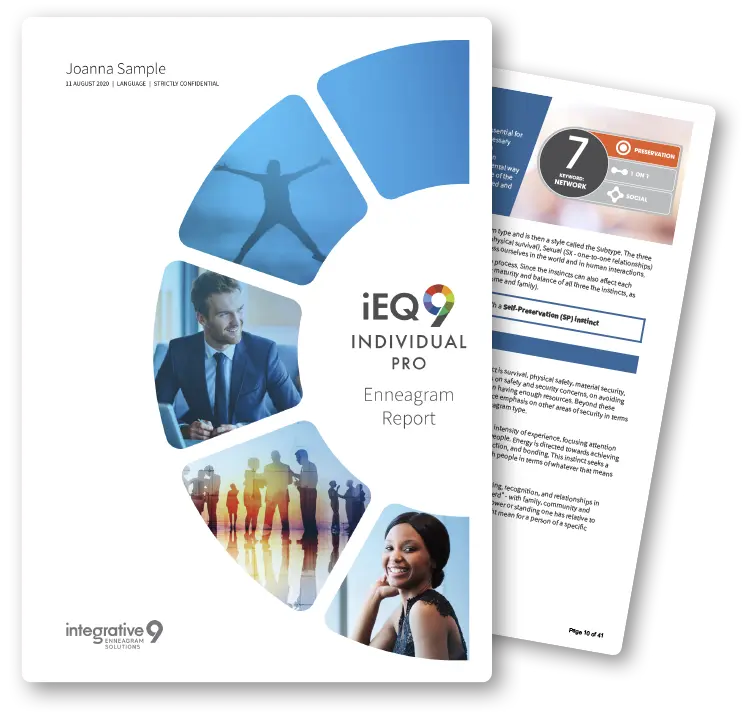
See your type, subtype and growth path in a personalised report. The iEQ9 is an intelligent, dynamically adaptive questionnaire: the questions change based on your answers, so each person answers 175 questions drawn from more than 2,000. It takes about 30 minutes, and your report covers your Enneagram profile, your subtype (one of 27), the Centers, the influence of both neighbouring wing types, Lines, Levels of Integration and six dimensions of Strain. Validated on 63,944 people across five languages. Reports from USD 60. Full refund within 30 days if you haven't opened your assessment link.
Get Your Enneagram Test

 What is the Enneagram?
 Introduction to the 27 Subtypes
 Introduction to the 3 Centers
 Wings
 Lines and Integration
 Enneagram History & Origin
 Enneagram for Myself
 Enneagram for Practitioners
 Enneagram for Business
 iEQ9 Individual Reports
 iEQ9 Team Reports
 iEQ9 Questionnaire
 Training Events
 Level 1 iEQ9 Accreditation
 Level 2 Enneagram Team Dynamics
 International Enneagram Conference
 iEQ9 Community of Practice Events
 About Integrative9
 Meet the Faculty
 Testimonials
 Contact Us
