


 One of the three subtypes of Type 5: The Quiet Specialist
SX5 is the One-to-One subtype of Enneagram Type 5, the Quiet Specialist, and the countertype of Type 5. Its key name is Confidant.
The shorthand joins an instinct to a type: "SX" is the One-to-One instinct and "5" is Enneagram Type 5. You will also see it written as "One-to-One 5", "SX 5" or, in some sources, "Sexual 5". It is one of the 27 subtypes in Dr Claudio Naranjo's model, which the iEQ9 uses.
This page describes that model. Read it as a prompt for reflection, not as a rule about any one person.
Fives value knowledge and understanding, observe before they engage and guard their privacy and independence. The One-to-One instinct turns attention to intensity of experience and to close one-to-one bonds. In the SX Five the two combine: the search for understanding is pursued through one trusted relationship.
SX Fives look for a person who truly "gets them". With that person they can be open, warm and expressive. Real relationships can be measured against an ideal of complete trust that no one fully meets.
Boundaries and self-sufficiency are less visible here than in other Fives, but they have not disappeared: the care with resources is concentrated rather than spread. Much is invested in one connection, so the SX Five can come to rely on that person to feel alive, test their loyalty and find it hard to share them.
The key name, Confidant, is shorthand for the trusted person this subtype seeks, and becomes. It is not a summary of the whole person.
In this model the passion of Type 5 is called avarice. The word does not mean greed for money. It means holding on to inner resources, such as time, energy, privacy and knowledge, from a sense that they are scarce and could be drained by others.
In each type, one subtype behaves in a way that runs against the usual picture of the type. The motivation is the same; the expression differs. Fives are usually described as private and detached. The SX Five looks more romantic and emotional, so an SX Five may not recognise themselves in descriptions of the withdrawn Five.
Two friends have talked most evenings for years. One starts a new relationship and becomes harder to reach. The other goes quiet, stops replying and waits to see whether the friend notices.
Several readings are possible. The friend who withdrew may have invested much of their inner life in that one connection and be testing whether it still holds, which is the SX5 pattern. They may be feeling the ordinary loss of a friendship's changed rhythm. Or they may simply be busy themselves.
The useful move is to say directly what they hope for, rather than wait to see whether the friend passes a test.
All three subtypes share the Five's need to understand and its care with inner resources. They differ in where that drive is aimed.
The subtypes overlap. Many Fives will recognise something in all three descriptions.
SX Fives are often mistaken for Type Four, because of their emotional depth, romantic intensity and artistic style. One difference lies in what the closeness is for: in the Five pattern, understanding and feeling safe in a world that can seem intrusive. Intensity in a close relationship is not evidence of SX5; many people have one person who matters above all others.
Equally, the subtype is not a flaw. Closeness need not mean dependence or exclusivity, and testing someone or keeping them to oneself is not proof of a special connection.
The next time a message to someone close goes unanswered for a day, write down what you have concluded from the silence. Then send one plain sentence saying what you would like and when, such as "I'd like to talk this week; would Thursday work?" Afterwards, compare what you had concluded with what they said.
This is an experiment to learn from, not a test of whether you are an SX5. Bringing balance to all three instincts is part of subtype work, and the instinct you use least is a useful place to begin. More on the core type is on the Type 5 Quiet Specialist page.
Reading the descriptions is a good place to start, though subtypes overlap and no description settles it on its own. The iEQ9 reports your subtype alongside your core type. Take the iEQ9 individual assessment, browse all 27 Enneagram subtypes, or read the guide to types and subtypes that get confused. Published research covers the nine core type scales, and research at subtype level is planned.
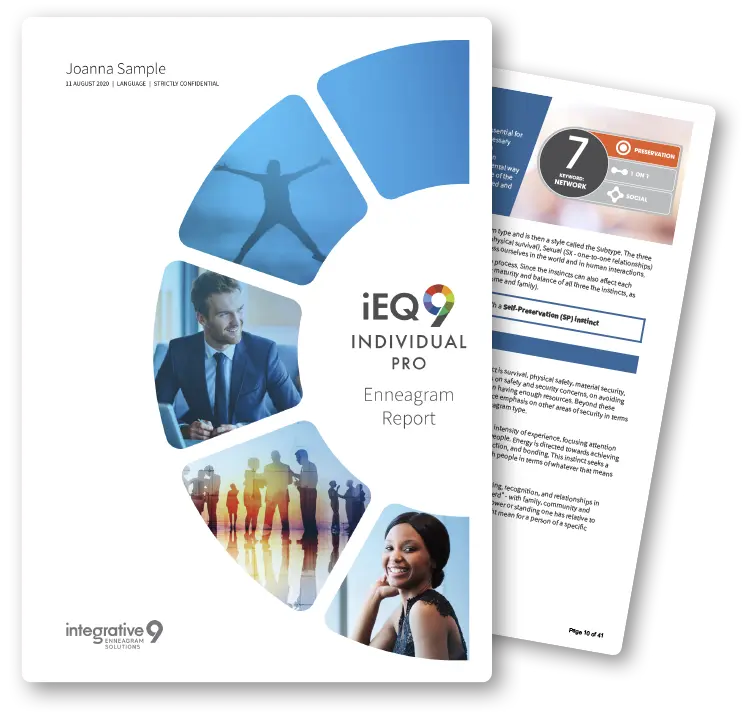
See your type, subtype and growth path in a personalised report. The iEQ9 is an intelligent, dynamically adaptive questionnaire: the questions change based on your answers, so each person answers 175 questions drawn from more than 2,000. It takes about 30 minutes, and your report covers your Enneagram profile, your subtype (one of 27), the Centers, the influence of both neighbouring wing types, Lines, Levels of Integration and six dimensions of Strain. Validated on 63,944 people across five languages. Reports from USD 60. Full refund within 30 days if you haven't opened your assessment link.
Get Your Enneagram Test

 What is the Enneagram?
 Introduction to the 27 Subtypes
 Introduction to the 3 Centers
 Wings
 Lines and Integration
 Enneagram History & Origin
 Enneagram for Myself
 Enneagram for Practitioners
 Enneagram for Business
 iEQ9 Individual Reports
 iEQ9 Team Reports
 iEQ9 Questionnaire
 Training Events
 Level 1 iEQ9 Accreditation
 Level 2 Enneagram Team Dynamics
 International Enneagram Conference
 iEQ9 Community of Practice Events
 About Integrative9
 Meet the Faculty
 Testimonials
 Contact Us
