


 One of the three subtypes of Type 6: The Loyal Sceptic
SX6 is the One-to-One subtype of Enneagram Type 6, the Loyal Sceptic, and the countertype of Type 6. Its key name is Intimidation.
The shorthand joins an instinct to a type: "SX" is the One-to-One instinct and "6" is Enneagram Type 6. You will also see it written as "One-to-One 6", "SX 6" or, in some sources, "Sexual 6". It is one of the 27 subtypes in Dr Claudio Naranjo's model, which the iEQ9 uses.
This page describes that model. Read it as a prompt for reflection, not as a rule about any one person.
Sixes value security and belonging, scan for what could go wrong and care a great deal about loyalty and trust. The One-to-One instinct turns attention to intensity of experience and to close one-to-one bonds. In the SX Six the two combine: they move towards what feels threatening, trying to be strong enough to face it.
SX Sixes tend to be bold, assertive and at times intimidating. They are counter-phobic: on the principle that the best defence is a good offence, they meet fear head-on. Strength and readiness to confront are how this subtype tries to feel safe, which can make it hard to connect with doubt or vulnerability. At its best, the pattern gives boldness and directness.
The key name, Intimidation, is shorthand for the strong front this subtype can present to a perceived threat, not an intention to frighten people or a summary of the whole person.
In this model the passion of Type 6 is doubt; Oscar Ichazo's original term was fear. It is not a specific fear or an anxiety disorder but a habit of vigilance and questioning, a difficulty trusting oneself, others or the situation. In the SX Six, fear is answered by taking the initiative.
In each type, one subtype behaves in a way that runs against the usual picture of the type. The motivation is the same; the expression differs. Sixes are usually described as cautious and anxious. The SX Six goes towards what it fears, so an SX Six may not recognise themselves in descriptions of the hesitant Six. Counter-phobic behaviour is a proposed response to fear, not proof that a confident person is secretly afraid.
A food bank's volunteer coordinator gets a short email from a trustee: "Can we talk about how the rota is working?" Within minutes they send a long reply defending every decision.
Several readings are possible. The email may have registered as an attack to be met head-on, which is the SX6 pattern. The coordinator may have been unfairly criticised before. They may simply be exhausted. Or the trustee may be unhappy.
The useful move is a pause that separates what was said from what was inferred, followed by one clarifying question.
All three subtypes share the Six's search for security and support in an uncertain world. They differ in where that drive is aimed.
The subtypes overlap. Many Sixes will recognise something in all three descriptions.
SX Sixes are often mistyped as Type Eight, because they are bold and assertive. In the Eight pattern strength is a starting point; in the SX6 pattern it is described as a response to fear. The motives can overlap. Boldness is not evidence of SX6, nor is enjoying risk, and sometimes a threat is real and meeting it directly is right.
Equally, the subtype is not recklessness or aggression. Read it as courage that is partly a defence, which serves well against a real threat and less well against an inferred one.
When a message or comment lands as a challenge, wait before you reply. Write down what was said and, separately, what you concluded. Then reply with one clarifying question. Afterwards, notice how closely the answer matched your inference, and what waiting felt like.
This is an experiment to learn from, not a test of whether you are an SX6. Bringing balance to all three instincts is part of subtype work, and the instinct you use least is a useful place to begin. More on the core type is on the Type 6 Loyal Sceptic page.
Reading the descriptions is a good place to start, though subtypes overlap and no description settles it on its own. The iEQ9 reports your subtype alongside your core type. Take the iEQ9 individual assessment, browse all 27 Enneagram subtypes, or read the guide to types and subtypes that get confused. Published research covers the nine core type scales, and research at subtype level is planned.
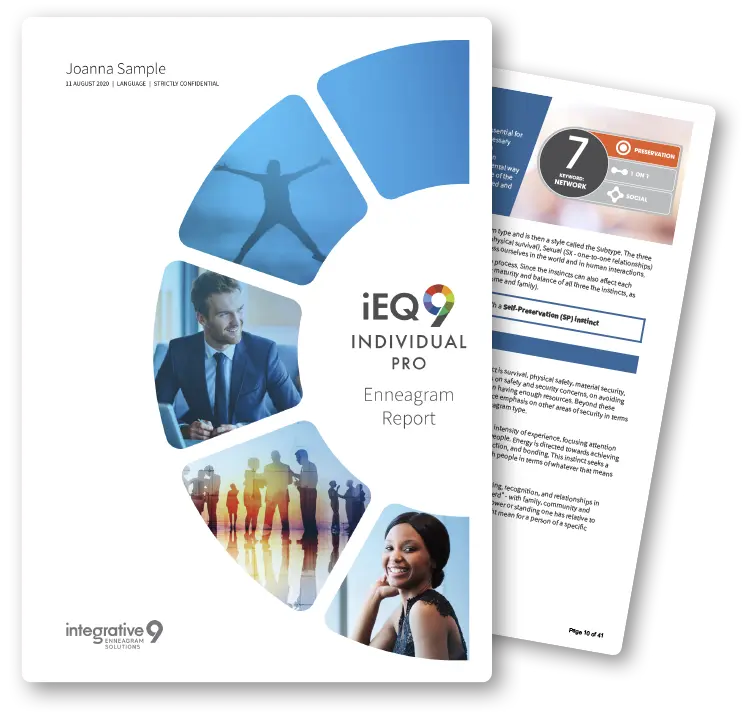
See your type, subtype and growth path in a personalised report. The iEQ9 is an intelligent, dynamically adaptive questionnaire: the questions change based on your answers, so each person answers 175 questions drawn from more than 2,000. It takes about 30 minutes, and your report covers your Enneagram profile, your subtype (one of 27), the Centers, the influence of both neighbouring wing types, Lines, Levels of Integration and six dimensions of Strain. Validated on 63,944 people across five languages. Reports from USD 60. Full refund within 30 days if you haven't opened your assessment link.
Get Your Enneagram Test

 What is the Enneagram?
 Introduction to the 27 Subtypes
 Introduction to the 3 Centers
 Wings
 Lines and Integration
 Enneagram History & Origin
 Enneagram for Myself
 Enneagram for Practitioners
 Enneagram for Business
 iEQ9 Individual Reports
 iEQ9 Team Reports
 iEQ9 Questionnaire
 Training Events
 Level 1 iEQ9 Accreditation
 Level 2 Enneagram Team Dynamics
 International Enneagram Conference
 iEQ9 Community of Practice Events
 About Integrative9
 Meet the Faculty
 Testimonials
 Contact Us
