


 One of the three subtypes of Type 4: The Intense Creative
SP4 is the Self-Preservation subtype of Enneagram Type 4, the Intense Creative, and the countertype of Type 4. Its key name is Tenacity.
The shorthand joins an instinct to a type: "SP" is the Self-Preservation instinct and "4" is Enneagram Type 4. You will also see it written as "Self-Preservation 4" or "SP 4". It is one of the 27 subtypes in Dr Claudio Naranjo's model, which the iEQ9 uses.
This page describes that model. Read it as a prompt for reflection, not as a rule about any one person.
Fours seek authenticity and meaning, and tend to focus on what is missing in themselves or in their lives. The Self-Preservation instinct turns attention to safety, well-being and material security. In the SP Four the two combine: longing and sensitivity are held inside and met with endurance.
SP Fours tend to carry difficulty quietly and work hard, and would rather be known as tough and uncomplaining than as someone who needs looking after. Though sensitive, they can lose touch with their feelings while coping, and often keep their pain to themselves. Familiar with hardship, they are empathic and quietly support others who struggle.
The key name, Tenacity, is shorthand for this capacity to keep going. It is not a summary of the whole person.
In this model the passion of Type 4 is called envy. The word means more than wanting what others have. At its root is a painful sense that something essential is missing in oneself, sharpened by comparison with what others seem to have. In the SP Four, that lack is endured more than expressed.
In each type, one subtype behaves in a way that runs against the usual picture of the type. The motivation is the same; the expression differs. Fours are usually described as openly emotional. The SP Four keeps suffering private, so an SP Four may not recognise themselves in descriptions of the dramatic, melancholic Four.
Someone has spent a year supporting a parent through a long illness, alongside a full-time job. When friends ask how things are, they say they are managing and change the subject. The friends stop asking.
Several readings are possible. The person may be carrying a real need while wanting to be seen as someone who copes, which is the SP4 pattern. They may come from a family where you do not burden others. They may simply have no energy left for the conversation. The behaviour alone does not say which.
The useful question, for the friends or the person, is whether "managing" is a choice about privacy or a request that has not yet been made.
All three subtypes share the Four's longing to be understood and its sensitivity to what is missing. They differ in where that drive is aimed.
The subtypes overlap. Many Fours will recognise something in all three descriptions.
SP Fours are often taken for people who need nothing, and their self-discipline can lead to them being mistaken for Type One. Endurance is not evidence of SP4. Hard circumstances, a culture that prizes not complaining, or a sound decision to keep something private produce the same quiet. What separates the pattern from the circumstance is what being seen to struggle would cost: for the SP Four, needing help can feel like losing their surest ground, the ability to cope.
Equally, privacy is a reasonable choice and resilience a real strength. Read the pattern as a gap between coping and being known, not a verdict that disclosure is better.
The next time someone you trust asks how you are and you hear yourself say "fine" while carrying something, add two sentences: one naming a specific burden, one naming something specific that would help. Afterwards, compare what you expected to happen with what did.
This is an experiment to learn from, not a test of whether you are an SP4. Bringing balance to all three instincts is part of subtype work, and the instinct you use least is a useful place to begin. More on the core type is on the Type 4 Intense Creative page.
Reading the descriptions is a good place to start, though subtypes overlap and no description settles it on its own. The iEQ9 reports your subtype alongside your core type. Take the iEQ9 individual assessment, browse all 27 Enneagram subtypes, or read the guide to types and subtypes that get confused. Published research covers the nine core type scales, and research at subtype level is planned.
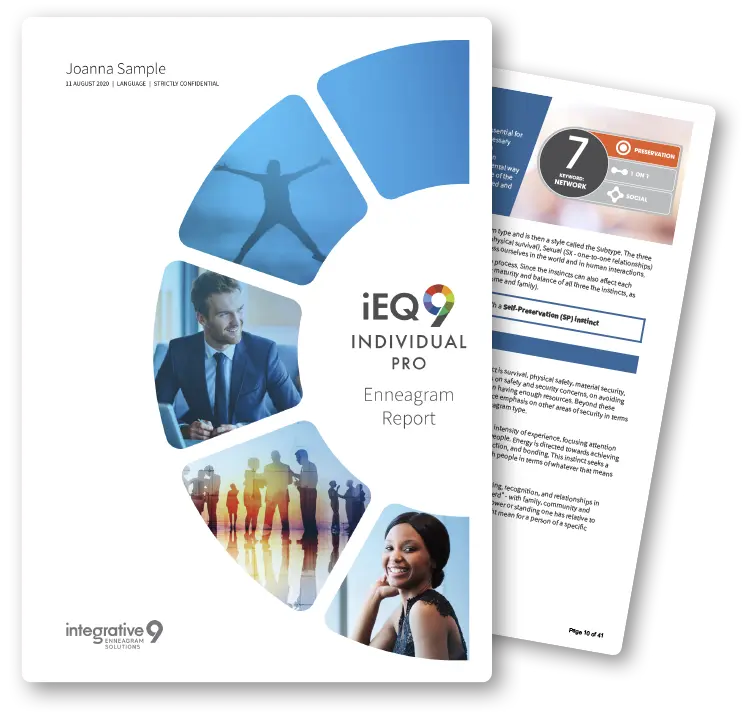
See your type, subtype and growth path in a personalised report. The iEQ9 is an intelligent, dynamically adaptive questionnaire: the questions change based on your answers, so each person answers 175 questions drawn from more than 2,000. It takes about 30 minutes, and your report covers your Enneagram profile, your subtype (one of 27), the Centers, the influence of both neighbouring wing types, Lines, Levels of Integration and six dimensions of Strain. Validated on 63,944 people across five languages. Reports from USD 60. Full refund within 30 days if you haven't opened your assessment link.
Get Your Enneagram Test

 What is the Enneagram?
 Introduction to the 27 Subtypes
 Introduction to the 3 Centers
 Wings
 Lines and Integration
 Enneagram History & Origin
 Enneagram for Myself
 Enneagram for Practitioners
 Enneagram for Business
 iEQ9 Individual Reports
 iEQ9 Team Reports
 iEQ9 Questionnaire
 Training Events
 Level 1 iEQ9 Accreditation
 Level 2 Enneagram Team Dynamics
 International Enneagram Conference
 iEQ9 Community of Practice Events
 About Integrative9
 Meet the Faculty
 Testimonials
 Contact Us
