


 One of the three subtypes of Type 6: The Loyal Sceptic
SP6 is the Self-Preservation subtype of Enneagram Type 6, the Loyal Sceptic. Its key name is Warmth.
The shorthand joins an instinct to a type: "SP" is the Self-Preservation instinct and "6" is Enneagram Type 6. You will also see it written as "Self-Preservation 6" or "SP 6". It is one of the 27 subtypes in Dr Claudio Naranjo's model, which the iEQ9 uses.
This page describes that model. Read it as a prompt for reflection, not as a rule about any one person.
Sixes value security and belonging. They scan for what could go wrong, consult an "internal committee" of questions, and care a great deal about loyalty and trust. The Self-Preservation instinct turns attention to safety, well-being and material security. In the SP Six the two combine: insecurity becomes a central theme, and safety is sought through warm, trusted relationships.
SP Sixes are sincerely affectionate and warm-hearted. To feel safe they build strong alliances, and friendliness makes the world feel less threatening. They tend to hold back anger and hesitate to share opinions, preferring caution to the risk of a mistake. Deciding alone can be hard, so they often look for reassurance from people they trust before committing. Their loyalty, warmth and alertness to risk make them steady allies.
The key name, Warmth, is shorthand for how this subtype seeks safety. It is not a summary of the whole person.
In this model the passion of Type 6 is doubt; Oscar Ichazo's original term was fear. It is not a specific fear or an anxiety disorder but a habit of vigilance and questioning, a difficulty trusting oneself, others or the situation. Descriptions of Type 6 distinguish a phobic pattern, which avoids risk, and a counter-phobic pattern, which meets fear head-on; "phobic" here is Enneagram terminology, not a clinical diagnosis. The SP Six sits closest to the phobic pattern.
Someone needs to choose a new energy tariff, knowing they can switch again within a few weeks without penalty. Over a fortnight they ask their partner, their sister and two colleagues for views and still do not decide. Their partner starts to lose patience.
Several readings are possible. The person may be looking for safety in the agreement of people they trust before committing, which is the SP6 pattern. Money may be tight, so a wrong choice would really matter. They may have been caught out by a bad contract before, or the information needed to compare tariffs may genuinely be missing.
The useful move is to agree a decision point, name what is still unknown, and make one bounded choice.
All three subtypes share the Six's search for security and support in an uncertain world. They differ in where that drive is aimed.
The subtypes overlap. Many Sixes will recognise something in all three descriptions.
SP Sixes are often taken for people who are indecisive or dependent. Caution and asking for advice are not evidence of SP6: a real risk, missing information, or a family or culture where decisions are made together produce the same behaviour. The question is whether consulting others has a point at which it is enough. For the SP Six, the next opinion can feel like the one that will finally make the choice safe.
Equally, warmth is not dependency and caution is not weakness; the pattern becomes costly when trusted opinions stand in for one's own judgment.
For your next small, reversible decision, set a time by which you will decide. Before then, write down what information is genuinely missing, get it if you can, and ask no more than one person's view. At the time you set, choose. Afterwards, notice what deciding felt like, and whether more opinions would have changed the outcome.
This is an experiment to learn from, not a test of whether you are an SP6. Bringing balance to all three instincts is part of subtype work, and the instinct you use least is a useful place to begin. More on the core type is on the Type 6 Loyal Sceptic page.
Reading the descriptions is a good place to start, though subtypes overlap and no description settles it on its own. The iEQ9 reports your subtype alongside your core type. Take the iEQ9 individual assessment, browse all 27 Enneagram subtypes, or read the guide to types and subtypes that get confused. Published research covers the nine core type scales, and research at subtype level is planned.
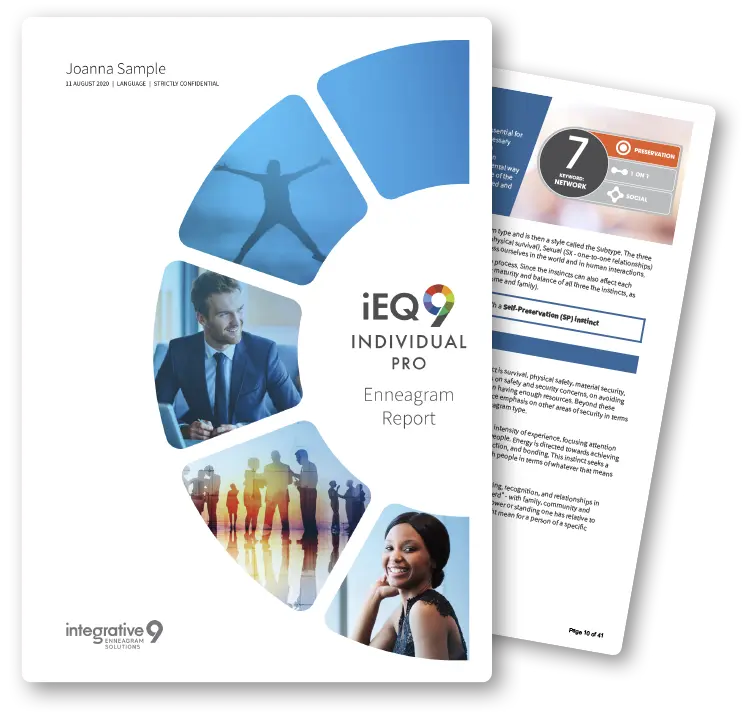
See your type, subtype and growth path in a personalised report. The iEQ9 is an intelligent, dynamically adaptive questionnaire: the questions change based on your answers, so each person answers 175 questions drawn from more than 2,000. It takes about 30 minutes, and your report covers your Enneagram profile, your subtype (one of 27), the Centers, the influence of both neighbouring wing types, Lines, Levels of Integration and six dimensions of Strain. Validated on 63,944 people across five languages. Reports from USD 60. Full refund within 30 days if you haven't opened your assessment link.
Get Your Enneagram Test

 What is the Enneagram?
 Introduction to the 27 Subtypes
 Introduction to the 3 Centers
 Wings
 Lines and Integration
 Enneagram History & Origin
 Enneagram for Myself
 Enneagram for Practitioners
 Enneagram for Business
 iEQ9 Individual Reports
 iEQ9 Team Reports
 iEQ9 Questionnaire
 Training Events
 Level 1 iEQ9 Accreditation
 Level 2 Enneagram Team Dynamics
 International Enneagram Conference
 iEQ9 Community of Practice Events
 About Integrative9
 Meet the Faculty
 Testimonials
 Contact Us
