


 One of the three subtypes of Type 2: The Considerate Helper
SX2 is the One-to-One subtype of Enneagram Type 2, the Considerate Helper. Its key name is Enchant.
The shorthand joins an instinct to a type: "SX" is the One-to-One instinct and "2" is Enneagram Type 2. You will also see it written as "One-to-One 2", "SX 2" or, in older sources, "Sexual Two". It is one of the 27 subtypes in Dr Claudio Naranjo's model, which the iEQ9 uses.
This page describes that model. Read it as a prompt for reflection, not as a rule about any one person.
Twos have a motivational need to be liked and appreciated, and they sense the feelings and needs of others easily. The One-to-One instinct is focused on the intensity of experience and on close relationships. In the SX Two the two combine: the need to be loved is focused on a few intense, close bonds, which need not be romantic ones.
SX Twos put their energy into attracting and building strong, intimate relationships, and within them they feel able to trust and say what they need. They are strong-willed, passionate and devoted, generous with attention, and quick to defend people they have chosen to protect. The traditional language for this subtype speaks of seduction. In this model that means drawing a particular person close and making them feel chosen; it is not a statement about sexual conduct.
The difficulty this model names is with limits: accepting a "no", keeping personal boundaries, or letting a relationship be less close than hoped. Intensity is not a measure of love, and no subtype excuses pressure on someone who has said no.
The key name, Enchant, is shorthand for the gift of making a connection feel special. It is not a summary of the whole person.
In this model the passion of Type 2 is called pride. The word does not mean arrogance. It means a self-image built around being the one who gives rather than the one who needs. In the SX Two it can take the form of believing one can be exactly what a particular person needs.
Someone invites a close friend away for a weekend they have planned in detail. The friend says no: they need a quiet weekend at home. The inviter suggests another date, then a shorter trip, and then feels hurt.
The friend may be tired, short of money or preoccupied, and the refusal may concern the weekend rather than the friendship. In the SX2 pattern, a declined invitation feels like a verdict on the closeness itself, so persistence feels like devotion rather than pressure.
The useful move is to accept the first clear answer and offer one low-key way to stay in touch, leaving the choice with the friend.
All three subtypes share the Two's need to be liked and appreciated, and the same passion, pride. They differ in where that need is aimed.
The subtypes overlap. Many Twos will recognise something in all three descriptions.
The SX Two is often taken for needy, and strong will and passion can lead to mistyping as a Four. A question that can help: is the intensity mainly about one's own feelings and identity (closer to the Four), or about being important to a particular person (closer to the SX Two)? Devotion or persistence alone is not evidence of SX2; a new relationship can produce both.
Equally, a capacity for deep connection is not a flaw. Read the pattern as a tension between wanting closeness and letting the other person set its pace.
Next time someone declines an invitation, reply with one sentence that accepts the answer and make no counter-offer. Leave the next contact to them. Afterwards, notice what you felt while waiting, and whether the relationship was changed by the no.
This is an experiment to learn from, not a test of whether you are an SX2. Bringing balance to all three instincts is part of subtype work, and the instinct you use least is a useful place to begin. More on the core type is on the Type 2 Considerate Helper page.
Reading the descriptions is a good place to start, though subtypes overlap and no description settles it on its own. The iEQ9 reports your subtype alongside your core type. Take the iEQ9 individual assessment, browse all 27 Enneagram subtypes, or read the guide to types and subtypes that get confused. Published research covers the nine core type scales, and research at subtype level is planned.
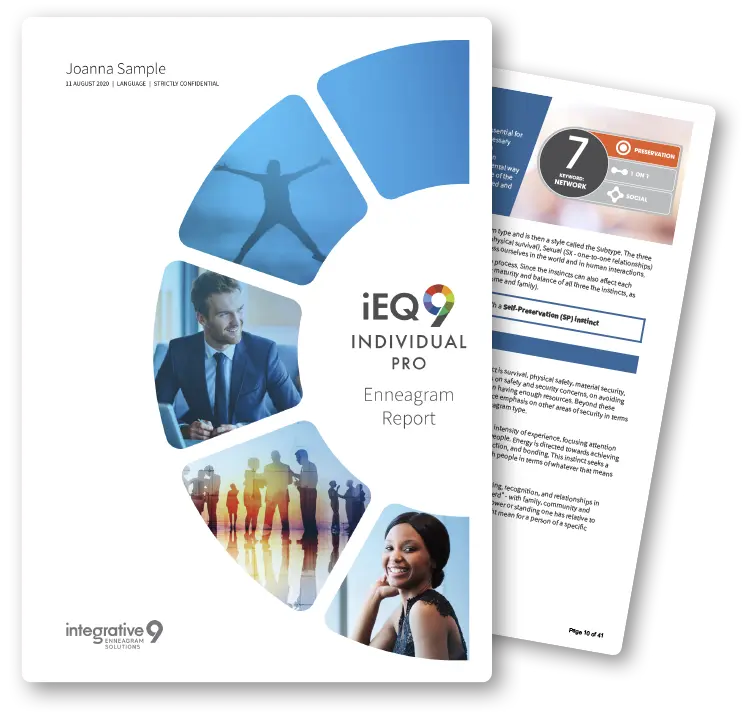
See your type, subtype and growth path in a personalised report. The iEQ9 is an intelligent, dynamically adaptive questionnaire: the questions change based on your answers, so each person answers 175 questions drawn from more than 2,000. It takes about 30 minutes, and your report covers your Enneagram profile, your subtype (one of 27), the Centers, the influence of both neighbouring wing types, Lines, Levels of Integration and six dimensions of Strain. Validated on 63,944 people across five languages. Reports from USD 60. Full refund within 30 days if you haven't opened your assessment link.
Get Your Enneagram Test

 What is the Enneagram?
 Introduction to the 27 Subtypes
 Introduction to the 3 Centers
 Wings
 Lines and Integration
 Enneagram History & Origin
 Enneagram for Myself
 Enneagram for Practitioners
 Enneagram for Business
 iEQ9 Individual Reports
 iEQ9 Team Reports
 iEQ9 Questionnaire
 Training Events
 Level 1 iEQ9 Accreditation
 Level 2 Enneagram Team Dynamics
 International Enneagram Conference
 iEQ9 Community of Practice Events
 About Integrative9
 Meet the Faculty
 Testimonials
 Contact Us
