


 One of the three subtypes of Type 2: The Considerate Helper
SO2 is the Social subtype of Enneagram Type 2, the Considerate Helper. Its key name is Ambition.
The shorthand joins an instinct to a type: "SO" is the Social instinct and "2" is Enneagram Type 2. You will also see it written as "Social 2" or "SO 2". It is one of the 27 subtypes in Dr Claudio Naranjo's model, which the iEQ9 uses.
This page describes that model. Read it as a prompt for reflection, not as a rule about any one person.
Twos have a motivational need to be liked and appreciated, and they are finely attuned to the needs of others. The Social instinct is the drive to get along with others and form secure social bonds, with a high awareness of norms and status in groups. In the SO Two the two combine: the need to be valued is directed at groups and communities rather than mainly at individuals.
SO Twos stand out from the crowd and often take a central or genuine social leadership role. They enjoy being "in the know" and build their influence on competence and connections. They draw people in through knowledge, usefulness and relationships rather than through charm alone. They are less focused on being looked after than other Twos, and giving more than they get can keep uncomfortable feelings at a distance.
The key name, Ambition, is shorthand for wanting influence and a valued place in the group. It is not a hidden scheme, and it is not a summary of the whole person.
In this model the passion of Type 2 is called pride. The word does not mean arrogance. It means a self-image built around being the one who gives rather than the one who needs. In the SO Two it can show as an inflated sense of how much the group depends on them.
Someone organises their neighbourhood's annual street party and knows every family, supplier and road-closure form. By the third year every question goes through them, and two newer volunteers quietly drift away.
Nobody else may have had a chance to learn, because the knowledge was never written down, or the organiser may simply enjoy the work. In the SO2 pattern, being the person everything passes through gives a valued, central place, and handing over feels like losing it. More than one reading can be true at once.
The useful move is to agree the scope of the organiser's role, ask the newer volunteers what they would like to do, and let one of them own a visible part.
All three subtypes share the Two's need to be liked and appreciated, and the same passion, pride. They differ in where that need is aimed.
The subtypes overlap. Many Twos will recognise something in all three descriptions.
The SO Two is often taken for power-seeking. Being central, competent or ambitious does not reveal a hidden motive: someone has to organise, and some roles demand it. This subtype may be mistaken for a Three or an Eight. A question that can help: is the influence mainly in the service of results and image (closer to the Three), of strength and control (closer to the Eight), or of being valued and needed by the group (closer to the SO Two)?
Equally, generosity combined with a wish for recognition is not a flaw.
Before you take on the next task for a group, ask the people involved what they want from you and agree what you will and will not do. Hand one visible piece to someone else and resist stepping back in. Afterwards, notice what you felt when the credit went to them.
This is an experiment to learn from, not a test of whether you are an SO2. Bringing balance to all three instincts is part of subtype work, and the instinct you use least is a useful place to begin. More on the core type is on the Type 2 Considerate Helper page.
Reading the descriptions is a good place to start, though subtypes overlap and no description settles it on its own. The iEQ9 reports your subtype alongside your core type. Take the iEQ9 individual assessment, browse all 27 Enneagram subtypes, or read the guide to types and subtypes that get confused. Published research covers the nine core type scales, and research at subtype level is planned.
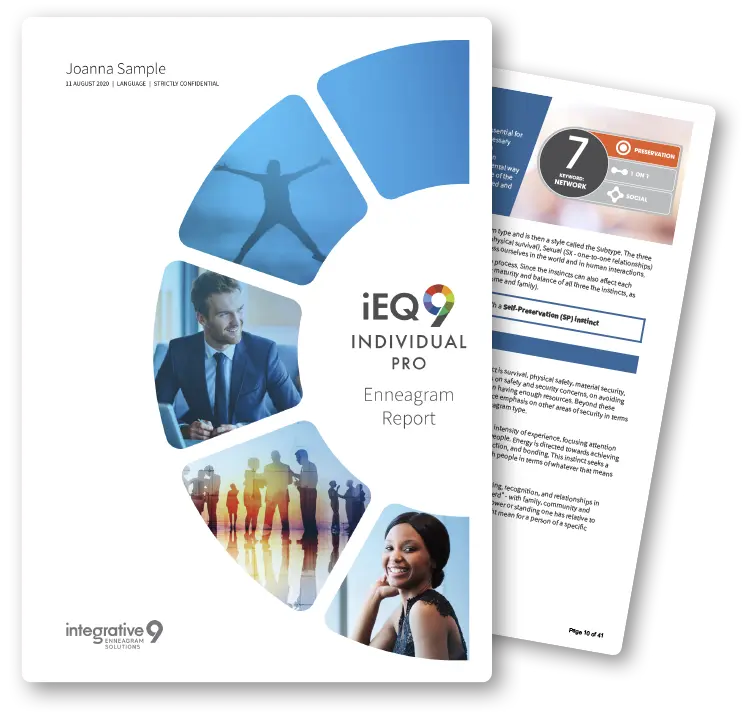
See your type, subtype and growth path in a personalised report. The iEQ9 is an intelligent, dynamically adaptive questionnaire: the questions change based on your answers, so each person answers 175 questions drawn from more than 2,000. It takes about 30 minutes, and your report covers your Enneagram profile, your subtype (one of 27), the Centers, the influence of both neighbouring wing types, Lines, Levels of Integration and six dimensions of Strain. Validated on 63,944 people across five languages. Reports from USD 60. Full refund within 30 days if you haven't opened your assessment link.
Get Your Enneagram Test

 What is the Enneagram?
 Introduction to the 27 Subtypes
 Introduction to the 3 Centers
 Wings
 Lines and Integration
 Enneagram History & Origin
 Enneagram for Myself
 Enneagram for Practitioners
 Enneagram for Business
 iEQ9 Individual Reports
 iEQ9 Team Reports
 iEQ9 Questionnaire
 Training Events
 Level 1 iEQ9 Accreditation
 Level 2 Enneagram Team Dynamics
 International Enneagram Conference
 iEQ9 Community of Practice Events
 About Integrative9
 Meet the Faculty
 Testimonials
 Contact Us
