


 One of the three subtypes of Type 8: The Active Controller
SX8 is the One-to-One subtype of Enneagram Type 8, the Active Controller. Its key name is Possession.
The shorthand joins an instinct to a type: "SX" is the One-to-One instinct and "8" is Enneagram Type 8. You will also see it written as "One-to-One 8", "One-on-One 8" or "SX 8", and the instinct is also called "Sexual" in some texts. It is one of the 27 subtypes in Dr Claudio Naranjo's model, which the iEQ9 uses.
This page describes that model. Read it as a prompt for reflection, not as a rule about any one person.
Eights want to be strong and to avoid showing vulnerability, and they resist any attempt to control them. The One-to-One instinct turns attention to intensity and close one-to-one connection. In the SX Eight the two combine: strength is aimed at intensity, influence and change, in close relationships and in the causes the person takes up.
SX Eights are magnetic and provocative. They stand out as challengers of convention and trailblazers, willing to unsettle people to make something happen, and they want to serve a worthy cause from a central or leading position. In close relationships they ask for complete commitment. The cost appears when influence slides into control, and disagreement is heard as disloyalty.
The key name, Possession, is shorthand for wanting a strong hold on the people and things that matter: to be central, trusted completely and influential. It does not mean anyone is, or should be, owned. Power does not entitle a person to compliance, and part of this subtype's development is making room for a real "no".
In this model the passion of Type 8 is called lust. The word does not mean sexual desire; it means an appetite for intensity and for more force, control and impact. The quality the model calls innocence is not naivety; it means meeting a person or situation freshly, without first bracing for a fight.
A residents' group is campaigning against a planning decision. Its leader has energy, contacts and a bold plan for a protest. One member argues for a formal objection with legal advice instead, and the leader overrules her in front of everyone.
One reading is the SX8 pattern: a drive for impact that hears disagreement as a threat to momentum. Another is practical: the deadline may really be close, and the group may need a quick decision.
The useful move is to ask her what she wants, listen, and change the plan where the answer warrants it.
All three subtypes share the Eight's drive to assert their strength and avoid being controlled. They differ in where that drive is aimed.
The subtypes overlap. Many Eights will recognise something in all three descriptions.
SX8 is often read as domineering or reckless, which misses the loyalty in the pattern and the wish to serve something larger. The intensity can also be mistaken for Type 4, the Intense Creative; one question that can clarify the difference is what the intensity is for, which in the SX Eight tends to be impact and change.
Equally, a forceful style or a readiness to break with convention is not evidence of SX8; a campaigning role, a crisis or long experience of not being heard produce the same behaviour in any type. None of this excuses coercion.
In your next strong disagreement with someone close to you, state your position once, at normal volume, and then ask them for theirs. Repeat back what you heard before you answer it. Afterwards, notice the moment you wanted to raise the intensity, and what you expected the extra force to achieve.
This is an experiment to learn from, not a test of whether you are an SX8. Bringing balance to all three instincts is part of subtype work, and the instinct you use least is a useful place to begin. More on the core type is on the Type 8 Active Controller page.
Reading the descriptions is a good place to start, though subtypes overlap and no description settles it on its own. The iEQ9 reports your subtype alongside your core type. Take the iEQ9 individual assessment, browse all 27 Enneagram subtypes, or read the guide to types and subtypes that get confused. Published research covers the nine core type scales, and research at subtype level is planned.
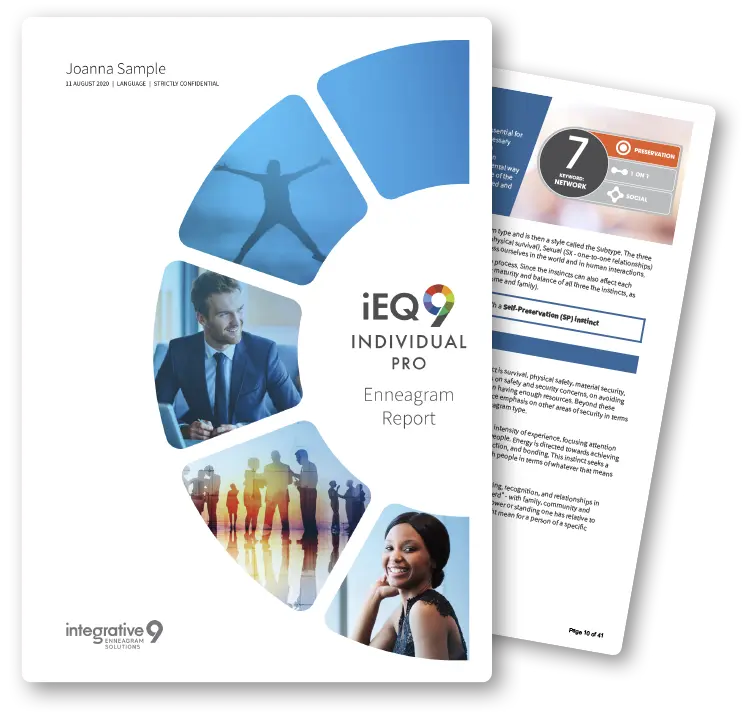
See your type, subtype and growth path in a personalised report. The iEQ9 is an intelligent, dynamically adaptive questionnaire: the questions change based on your answers, so each person answers 175 questions drawn from more than 2,000. It takes about 30 minutes, and your report covers your Enneagram profile, your subtype (one of 27), the Centers, the influence of both neighbouring wing types, Lines, Levels of Integration and six dimensions of Strain. Validated on 63,944 people across five languages. Reports from USD 60. Full refund within 30 days if you haven't opened your assessment link.
Get Your Enneagram Test

 What is the Enneagram?
 Introduction to the 27 Subtypes
 Introduction to the 3 Centers
 Wings
 Lines and Integration
 Enneagram History & Origin
 Enneagram for Myself
 Enneagram for Practitioners
 Enneagram for Business
 iEQ9 Individual Reports
 iEQ9 Team Reports
 iEQ9 Questionnaire
 Training Events
 Level 1 iEQ9 Accreditation
 Level 2 Enneagram Team Dynamics
 International Enneagram Conference
 iEQ9 Community of Practice Events
 About Integrative9
 Meet the Faculty
 Testimonials
 Contact Us
