


 One of the three subtypes of Type 5: The Quiet Specialist
SO5 is the Social subtype of Enneagram Type 5, the Quiet Specialist. Its key name is Totem.
The shorthand joins an instinct to a type: "SO" is the Social instinct and "5" is Enneagram Type 5. You will also see it written as "Social 5" or "SO 5". It is one of the 27 subtypes in Dr Claudio Naranjo's model, which the iEQ9 uses.
This page describes that model. Read it as a prompt for reflection, not as a rule about any one person.
Fives value knowledge and understanding, observe before they engage and guard their independence; for the Five, the mind is a refuge. The Social instinct turns attention to belonging and to one's place in groups. In the SO Five the two combine: the need to know becomes a way of connecting, through shared ideas and ideals rather than through everyday social life.
SO Fives look for the essence or meaning of situations and are drawn to the big questions. They connect with groups or experts who share their ideals, and a vision of a more enlightened society can feel like a calling, shared with real energy. At the same time they may hold back time, space and personal involvement from the people around them, and stay at some distance from everyday concerns and emotions.
The key name, Totem, is shorthand. A totem is an emblem of what a group holds in common; here it points to relating to people through shared knowledge and ideals, and to the value placed on those who embody them. It is not a summary of the whole person.
In this model the passion of Type 5 is called avarice. The word does not mean greed for money. It means holding on to inner resources, such as time, energy, privacy and knowledge, from a sense that they are scarce and could be drained by others. In the SO Five it can show as being generous with ideas while keeping oneself back.
A team is deciding which of two software systems to adopt, and asks its most knowledgeable member for a view. They give a thorough account of the design principles behind both, which the team finds interesting but cannot turn into a choice.
Several readings are possible. The person may be most at ease contributing at the level of ideas and less at ease committing to a concrete shared choice, which is the SO5 pattern. Their role may require them to set out the options and leave the decision to others. Or the information that would settle the question may genuinely be missing.
The useful question is what decision the knowledge is needed for, and what one small next step it points to.
All three subtypes share the Five's need to understand and its care with inner resources. They differ in where that drive is aimed.
The subtypes overlap. Many Fives will recognise something in all three descriptions.
SO Fives are often taken for people who are aloof, superior or out of touch. Expertise and a love of ideas are not evidence of SO5, and they are not defensive in themselves: many people work with abstract material because that is what the work requires. Energy in a group, or its absence, says little on its own.
Equally, the pattern is not brilliance or detachment as a fixed trait. Read it as a way of belonging that runs through shared understanding, which becomes costly when the ideas stand in for personal presence.
The next time someone asks for your view, first ask what decision it is needed for. Then offer one idea translated into a small action the group can take together. Afterwards, notice whether contributing at that level felt like giving something away, and what the group did with it.
This is an experiment to learn from, not a test of whether you are an SO5. Bringing balance to all three instincts is part of subtype work, and the instinct you use least is a useful place to begin. More on the core type is on the Type 5 Quiet Specialist page.
Reading the descriptions is a good place to start, though subtypes overlap and no description settles it on its own. The iEQ9 reports your subtype alongside your core type. Take the iEQ9 individual assessment, browse all 27 Enneagram subtypes, or read the guide to types and subtypes that get confused. Published research covers the nine core type scales, and research at subtype level is planned.
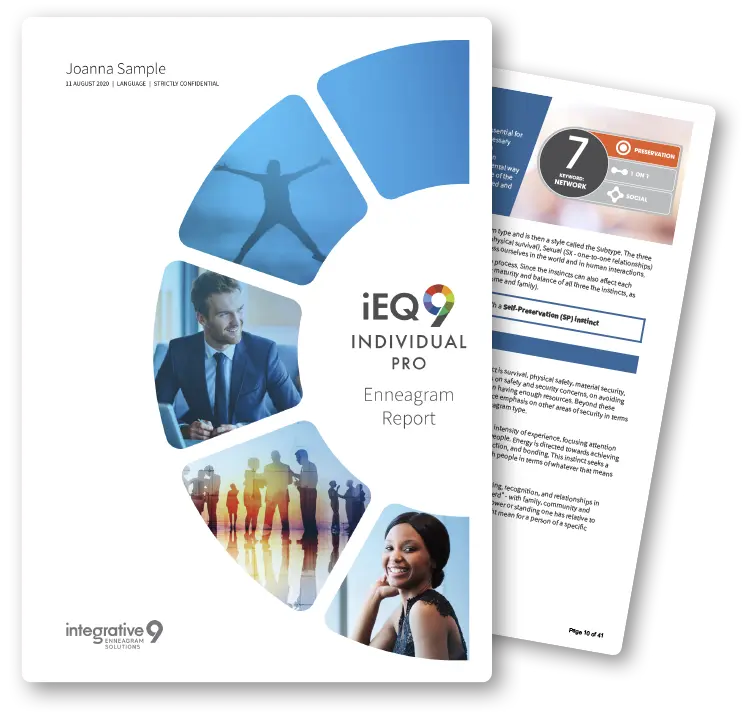
See your type, subtype and growth path in a personalised report. The iEQ9 is an intelligent, dynamically adaptive questionnaire: the questions change based on your answers, so each person answers 175 questions drawn from more than 2,000. It takes about 30 minutes, and your report covers your Enneagram profile, your subtype (one of 27), the Centers, the influence of both neighbouring wing types, Lines, Levels of Integration and six dimensions of Strain. Validated on 63,944 people across five languages. Reports from USD 60. Full refund within 30 days if you haven't opened your assessment link.
Get Your Enneagram Test

 What is the Enneagram?
 Introduction to the 27 Subtypes
 Introduction to the 3 Centers
 Wings
 Lines and Integration
 Enneagram History & Origin
 Enneagram for Myself
 Enneagram for Practitioners
 Enneagram for Business
 iEQ9 Individual Reports
 iEQ9 Team Reports
 iEQ9 Questionnaire
 Training Events
 Level 1 iEQ9 Accreditation
 Level 2 Enneagram Team Dynamics
 International Enneagram Conference
 iEQ9 Community of Practice Events
 About Integrative9
 Meet the Faculty
 Testimonials
 Contact Us
