


 One of the three subtypes of Type 4: The Intense Creative
SX4 is the One-to-One subtype of Enneagram Type 4, the Intense Creative. Its key name is Competition.
The shorthand joins an instinct to a type: "SX" is the One-to-One instinct and "4" is Enneagram Type 4. You will also see it written as "One-to-One 4", "SX 4" or, in some sources, "Sexual 4". It is one of the 27 subtypes in Dr Claudio Naranjo's model, which the iEQ9 uses.
This page describes that model. Read it as a prompt for reflection, not as a rule about any one person.
Fours seek authenticity and meaning, tend to focus on what is missing in themselves or in their lives, and long to be understood. The One-to-One instinct turns attention to intensity of experience and to close one-to-one bonds. In the SX Four the two combine: the sense of what is missing becomes active, voiced and directed at the people who matter most.
SX Fours are intense and say what they feel and need. Where other Fours turn pain inward, this subtype tends to turn it outward, into competition, demands and at times anger. Being the best can be a way out of the feeling of lack. Rather than feel ashamed of a hurt, they are more likely to protest it.
This directness brings passion, honesty about need and a drive to excel. It can also set up a cycle: when others do not meet the demand, the SX Four feels rejected, pushes harder and grows angry, and the anger can cover sadness or confusion that is harder to show.
The key name, Competition, is shorthand for how this subtype tends to handle envy. It is not a summary of the whole person.
In this model the passion of Type 4 is called envy. The word means more than wanting what others have. At its root is a painful sense that something essential is missing in oneself, sharpened by comparison with what others seem to have. In the SX Four, envy is turned outward, closer to "why do they have it and not me?" than to "I am less than them".
Two designers pitch ideas for the same campaign, and the manager chooses one. In the meeting, the designer whose idea lost questions the decision sharply and suggests favouritism. Later, alone, they mostly feel flat and sad.
Several readings are possible. The setback may have become a contest, with hurt turned into accusation, which is the SX4 pattern. It may be ordinary ambition. Or the process may really have been unfair, in which case the protest was justified even if its delivery was not.
The useful question is what the designer wants: a fair process, feedback or a chance at the next brief, since each calls for a different request.
All three subtypes share the Four's longing to be understood and its sensitivity to what is missing. They differ in where that drive is aimed.
The subtypes overlap. Many Fours will recognise something in all three descriptions.
SX Fours are sometimes mistyped as Type Three, because of the drive to win, or as Type Eight, because of the directness and anger. Competitiveness and anger are not evidence of SX4. Many people compete for the love of it, many are rightly angry about unfair treatment, and anger, competition and sadness can sit together in anyone.
Equally, voicing needs is not unreasonable, and the subtype is not a flaw: the pattern is not wanting too much, but letting the demand do the talking while the hurt goes unnamed.
Before responding to a setback involving another person, write down in one sentence the outcome you want. Then ask for it in a way that does not diminish the other person. Afterwards, ask whether it brought you closer, and what feeling sat under your first impulse.
This is an experiment to learn from, not a test of whether you are an SX4. Bringing balance to all three instincts is part of subtype work, and the instinct you use least is a useful place to begin. More on the core type is on the Type 4 Intense Creative page.
Reading the descriptions is a good place to start, though subtypes overlap and no description settles it on its own. The iEQ9 reports your subtype alongside your core type. Take the iEQ9 individual assessment, browse all 27 Enneagram subtypes, or read the guide to types and subtypes that get confused. Published research covers the nine core type scales, and research at subtype level is planned.
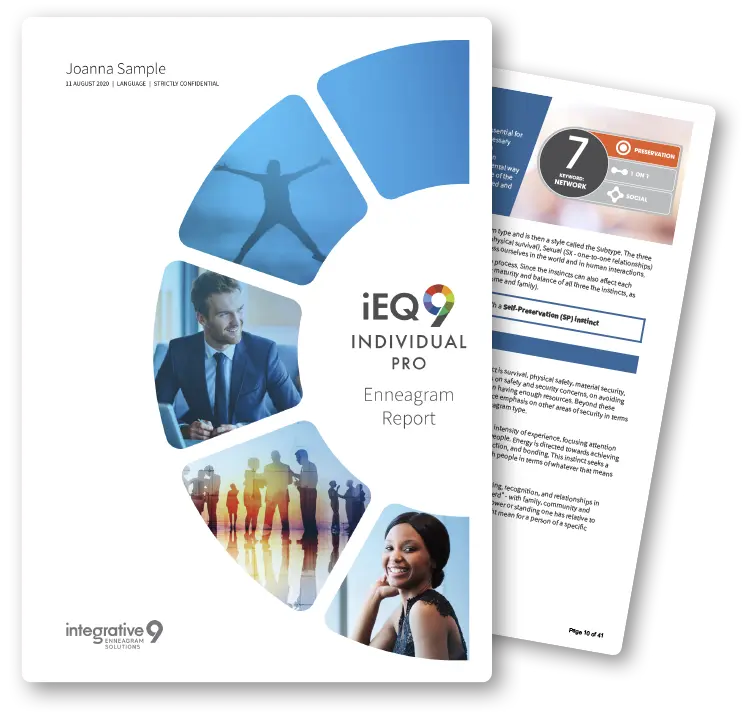
See your type, subtype and growth path in a personalised report. The iEQ9 is an intelligent, dynamically adaptive questionnaire: the questions change based on your answers, so each person answers 175 questions drawn from more than 2,000. It takes about 30 minutes, and your report covers your Enneagram profile, your subtype (one of 27), the Centers, the influence of both neighbouring wing types, Lines, Levels of Integration and six dimensions of Strain. Validated on 63,944 people across five languages. Reports from USD 60. Full refund within 30 days if you haven't opened your assessment link.
Get Your Enneagram Test

 What is the Enneagram?
 Introduction to the 27 Subtypes
 Introduction to the 3 Centers
 Wings
 Lines and Integration
 Enneagram History & Origin
 Enneagram for Myself
 Enneagram for Practitioners
 Enneagram for Business
 iEQ9 Individual Reports
 iEQ9 Team Reports
 iEQ9 Questionnaire
 Training Events
 Level 1 iEQ9 Accreditation
 Level 2 Enneagram Team Dynamics
 International Enneagram Conference
 iEQ9 Community of Practice Events
 About Integrative9
 Meet the Faculty
 Testimonials
 Contact Us
