


 One of the three subtypes of Type 9: The Adaptive Peacemaker
SP9 is the Self-Preservation subtype of Enneagram Type 9, the Adaptive Peacemaker. Its key name is Appetite.
The shorthand joins an instinct to a type: "SP" is the Self-Preservation instinct and "9" is Enneagram Type 9. You will also see it written as "Self-Preservation 9" or "SP 9". It is one of the 27 subtypes in Dr Claudio Naranjo's model, which the iEQ9 uses.
This page describes that model. Read it as a prompt for reflection, not as a rule about any one person.
Nines want to be settled and in harmony with the world, so being accommodating and avoiding conflict matter to them. The Self-Preservation instinct turns attention to safety, well-being and physical comfort. In the SP Nine the two combine: peace is found through meeting physical needs and keeping a steady daily rhythm.
SP Nines build routines around meals, rest, reading and time alone, and they can become irritable and stubborn when others upset that balance. Like other Nines they tend to resist being controlled, often quietly. Their steadiness is a strength: they are often calm, practical and easy to be around. The cost appears when comfortable routines fill the space where a chosen priority, a difficult conversation or an ambition would go.
The key name, Appetite, is shorthand for settling through physical needs and familiar pleasures. Eating, reading and sleeping are ordinary activities; the name points to how comfort can stand in for attention to what the person wants. It is not a summary of the whole person.
In this model the passion of Type 9 is called Self-Forgetting. It does not mean laziness; it means losing touch with one's own priorities, opinions and wants, so that what matters waits. The quality the model calls Essential Action, which this site also describes as right, sustainable action, is not simply doing more, since busyness can be another way of staying out of touch. It means action with the person in it: acting from one's own wants and priorities.
Someone has meant to finish an application for a part-time course for three months. Each evening they come home, cook, read for a while and go to bed early, and the form stays half completed. Their partner asks, gently, whether they still want to do the course.
One reading is the SP9 pattern: a restful routine that also keeps a personal priority comfortably out of reach. Another is that they are worn out by a demanding job, unwell, or quietly unsure whether the course is worth the money.
The useful question is not whether they rest too much, but whether the course is still something they want.
All three subtypes share the Nine's wish to feel connected and keep the peace. They differ in where that drive is aimed.
The subtypes overlap. Many Nines will recognise something in all three descriptions.
SP9 is easily read as lazy. That misses how much steady, practical work this subtype often does, and that routine is a genuine source of well-being. Rest is not the problem the pattern describes.
Equally, enjoying food, sleep or time alone is not evidence of SP9; workload, illness, exhaustion or caring responsibilities produce the same picture in any type. The question that separates the pattern from the circumstance is what the routine is doing: restoring energy for something chosen, or quietly taking its place.
Choose one small action towards something you have been putting off, short enough to do in ten minutes. The next time you sit down to a comfort activity at home, do the action first, then return to the comfort activity without judging yourself for wanting it. Afterwards, notice how the evening felt, and whether the rest was any less restful.
This is an experiment to learn from, not a test of whether you are an SP9. Bringing balance to all three instincts is part of subtype work, and the instinct you use least is a useful place to begin. More on the core type is on the Type 9 Adaptive Peacemaker page.
Reading the descriptions is a good place to start, though subtypes overlap and no description settles it on its own. The iEQ9 reports your subtype alongside your core type. Take the iEQ9 individual assessment, browse all 27 Enneagram subtypes, or read the guide to types and subtypes that get confused. Published research covers the nine core type scales, and research at subtype level is planned.
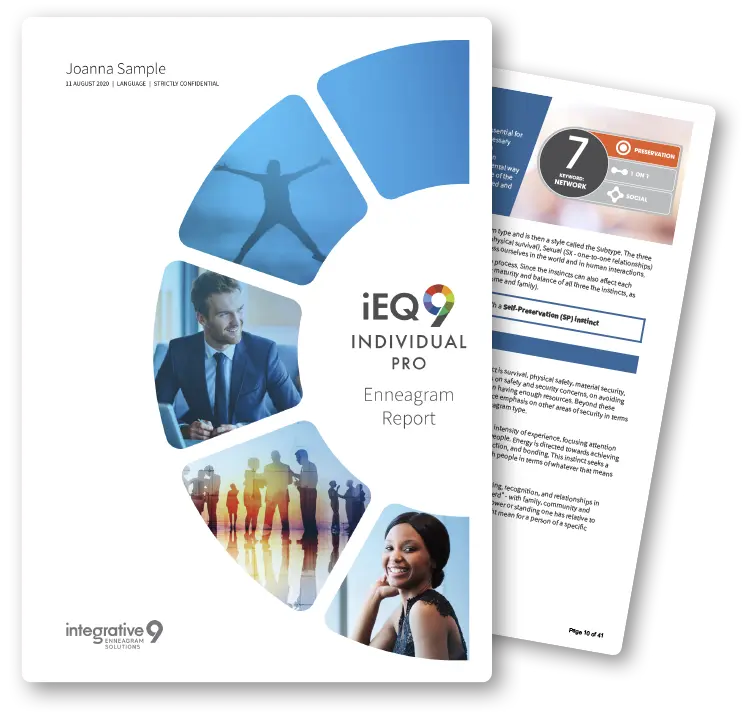
See your type, subtype and growth path in a personalised report. The iEQ9 is an intelligent, dynamically adaptive questionnaire: the questions change based on your answers, so each person answers 175 questions drawn from more than 2,000. It takes about 30 minutes, and your report covers your Enneagram profile, your subtype (one of 27), the Centers, the influence of both neighbouring wing types, Lines, Levels of Integration and six dimensions of Strain. Validated on 63,944 people across five languages. Reports from USD 60. Full refund within 30 days if you haven't opened your assessment link.
Get Your Enneagram Test

 What is the Enneagram?
 Introduction to the 27 Subtypes
 Introduction to the 3 Centers
 Wings
 Lines and Integration
 Enneagram History & Origin
 Enneagram for Myself
 Enneagram for Practitioners
 Enneagram for Business
 iEQ9 Individual Reports
 iEQ9 Team Reports
 iEQ9 Questionnaire
 Training Events
 Level 1 iEQ9 Accreditation
 Level 2 Enneagram Team Dynamics
 International Enneagram Conference
 iEQ9 Community of Practice Events
 About Integrative9
 Meet the Faculty
 Testimonials
 Contact Us
