


 One of the three subtypes of Type 1: The Strict Perfectionist
SP1 is the Self-Preservation subtype of Enneagram Type 1, the Strict Perfectionist. Its key name is Worry.
The shorthand joins an instinct to a type: "SP" is the Self-Preservation instinct and "1" is Enneagram Type 1. You will also see it written as "Self-Preservation 1" or "SP 1". It is one of the 27 subtypes in Dr Claudio Naranjo's model, which the iEQ9 uses.
This page describes that model. Read it as a prompt for reflection, not as a rule about any one person.
Ones are driven by the need to be good and right, and an inner voice of "I should" and "I must" measures how things are against how they ought to be. The Self-Preservation instinct turns attention to safety, well-being, and material and financial security. In the SP One the two combine: the drive to get things right is put to work keeping life safe, prepared and under control.
SP Ones try to anticipate risks before they arise and like to be prepared down to the smallest detail. They tend to be organised, practical and reliable. The same care can delay action on important or ambiguous issues, because there is always one more thing to check. Their sense of responsibility is high, and their inner critic, this model's name for a running commentary on one's own performance, is aimed first at themselves.
The key name, Worry, is shorthand for where this subtype's energy goes: into anticipating what could go wrong. It is not a summary of the whole person, nor a description of an anxiety condition.
In this model the passion of Type 1 is called anger. The word does not mean that Ones are angry people. It describes a steady resentment that things, including oneself, are not as they should be. The SP One rarely shows it, and it tends to come out as irritation, physical tension or very controlled politeness.
A family is leaving for a week away. One person has packed two days early, checked the tickets three times and wants to leave for the airport an hour before anyone else thinks necessary. The others find it exhausting.
There are several ways to read this. The last trip may really have gone wrong, or this person may be the only one who ever deals with the paperwork. It may also be the SP1 pattern, in which being prepared for everything is how a worried mind earns the right to relax. The early start alone does not say which.
The useful question is what the preparation is guarding against, and whether one more check would actually reduce that risk.
All three subtypes share the One's drive to be good and right, and the same passion, anger. They differ in where that drive is aimed.
The subtypes overlap. Many Ones will recognise something in all three descriptions.
Worry and careful preparation are not evidence of SP1. A high-stakes job or a recent mistake with real consequences produces them in anyone. The SP One is sometimes taken for a Six, especially the Social Six (SO6, Duty), since both scan for what could go wrong. A question that can help: is the worry mainly about falling short of a standard, or about whether the situation and the people in it can be trusted? Many people find something of both.
Equally, the pattern is not a flaw. The attention that produces worry also produces reliability.
Pick one event in the coming week that you would normally over-prepare for. Write down the three things that most need to be ready, prepare those, and deliberately leave the rest. Afterwards, notice how the worry behaved once the list was done, and whether anything you left actually mattered.
This is an experiment to learn from, not a test of whether you are an SP1. Bringing balance to all three instincts is part of subtype work, and the instinct you use least is a useful place to begin. More on the core type is on the Type 1 Strict Perfectionist page.
Reading the descriptions is a good place to start, though subtypes overlap and no description settles it on its own. The iEQ9 reports your subtype alongside your core type. Take the iEQ9 individual assessment, browse all 27 Enneagram subtypes, or read the guide to types and subtypes that get confused. Published research covers the nine core type scales, and research at subtype level is planned.
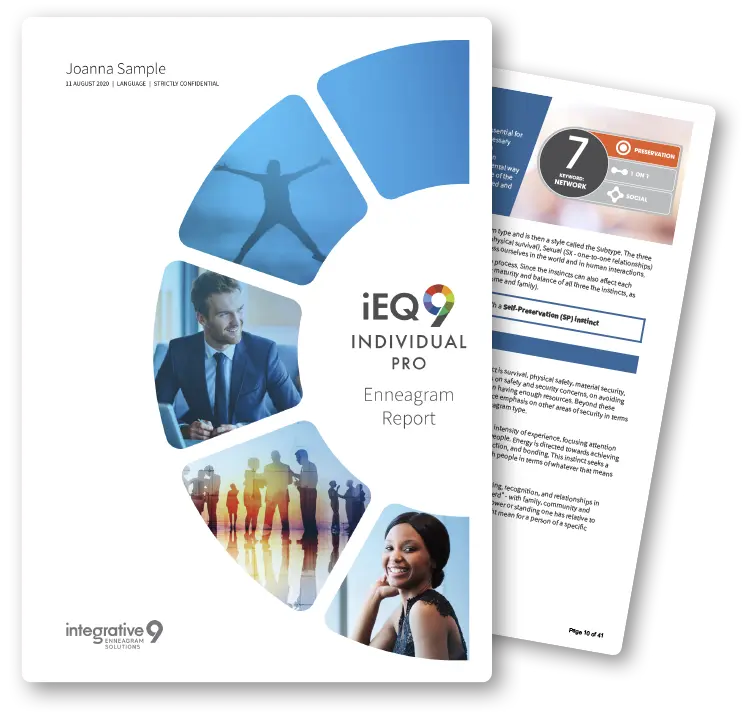
See your type, subtype and growth path in a personalised report. The iEQ9 is an intelligent, dynamically adaptive questionnaire: the questions change based on your answers, so each person answers 175 questions drawn from more than 2,000. It takes about 30 minutes, and your report covers your Enneagram profile, your subtype (one of 27), the Centers, the influence of both neighbouring wing types, Lines, Levels of Integration and six dimensions of Strain. Validated on 63,944 people across five languages. Reports from USD 60. Full refund within 30 days if you haven't opened your assessment link.
Get Your Enneagram Test

 What is the Enneagram?
 Introduction to the 27 Subtypes
 Introduction to the 3 Centers
 Wings
 Lines and Integration
 Enneagram History & Origin
 Enneagram for Myself
 Enneagram for Practitioners
 Enneagram for Business
 iEQ9 Individual Reports
 iEQ9 Team Reports
 iEQ9 Questionnaire
 Training Events
 Level 1 iEQ9 Accreditation
 Level 2 Enneagram Team Dynamics
 International Enneagram Conference
 iEQ9 Community of Practice Events
 About Integrative9
 Meet the Faculty
 Testimonials
 Contact Us
