


 One of the three subtypes of Type 7: The Enthusiastic Visionary
SP7 is the Self-Preservation subtype of Enneagram Type 7, the Enthusiastic Visionary. Its key name is Network.
The shorthand joins an instinct to a type: "SP" is the Self-Preservation instinct and "7" is Enneagram Type 7. You will also see it written as "Self-Preservation 7" or "SP 7". It is one of the 27 subtypes in Dr Claudio Naranjo's model, which the iEQ9 uses.
This page describes that model. Read it as a prompt for reflection, not as a rule about any one person.
Sevens want to experience life to the full and avoid pain, and they value freedom, options and optimism. The Self-Preservation instinct turns attention to safety, well-being and material security. In the SP Seven the two combine: the appetite for good experiences builds a secure base of reliable people, useful contacts and the good things in life.
SP Sevens are often skilled networkers who gather a "family" of close supporters and want the best for everyone in it. They are practical and resourceful, good at getting what they need to enjoy life and feel safe, and good at making a persuasive case for whatever they already want to do. The cost appears when the network and its pleasures become mainly a guard against discomfort, and when enthusiastic promises run ahead of what can be delivered.
The key name, Network, is shorthand for where this subtype's effort goes. It is not a summary of the whole person.
In this model the passion of Type 7 is called gluttony. The word does not refer to food. It means an appetite for more: more options, more stimulation, more plans, as if the next experience could supply what the present one lacks. The quality the model calls sobriety is not abstinence; it means taking in what is actually here and finding it enough.
A group of friends plan a weekend away. One of them, delighted by the idea, offers to find the house, arrange transport and get a discount through someone they know. A fortnight before the trip, nothing is booked.
The pleasure of the plan, and the role at its centre, may have outrun the dull work of deposits and dates, which is the SP7 pattern. The person may equally have had a heavy month at work, or be waiting on a contact who has not replied.
The useful move is to separate the possibility from the commitment: who books what, by when, and with whose money.
All three subtypes share the Seven's search for fulfilment and avoidance of discomfort. They differ in where that drive is aimed.
The subtypes overlap. Many Sevens will recognise something in all three descriptions.
SP7 is easily read as self-interest. That reading misses the anxiety the pattern manages: the network is a way of feeling safe in a world that could limit or hurt, and the generosity within it is usually real.
Equally, a taste for good food, a wide circle of contacts or a talent for finding a deal is not evidence of SP7; a sociable job or a family culture of hospitality produce the same picture in people of any type. The question that separates the pattern from the circumstance is what happens when the options close: for the SP Seven, having no fallback can feel like a real threat.
The next time you feel the urge to offer something exciting, such as a trip or a project, pause and write down the time it will take, the money it will need and who will do the work. Then make the offer in those terms, or a smaller one. Afterwards, notice whether the smaller, definite promise felt like a loss.
This is an experiment to learn from, not a test of whether you are an SP7. Bringing balance to all three instincts is part of subtype work, and the instinct you use least is a useful place to begin. More on the core type is on the Type 7 Enthusiastic Visionary page.
Reading the descriptions is a good place to start, though subtypes overlap and no description settles it on its own. The iEQ9 reports your subtype alongside your core type. Take the iEQ9 individual assessment, browse all 27 Enneagram subtypes, or read the guide to types and subtypes that get confused. Published research covers the nine core type scales, and research at subtype level is planned.
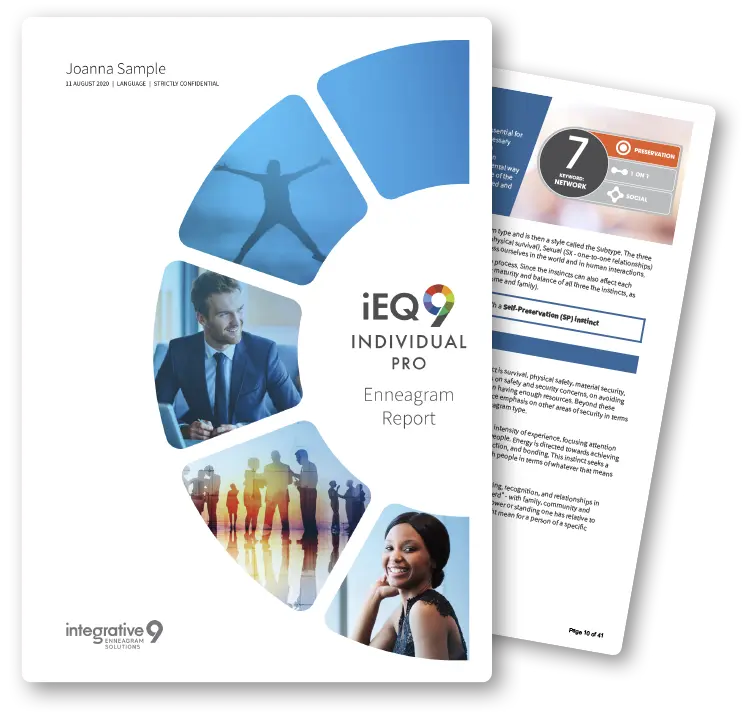
See your type, subtype and growth path in a personalised report. The iEQ9 is an intelligent, dynamically adaptive questionnaire: the questions change based on your answers, so each person answers 175 questions drawn from more than 2,000. It takes about 30 minutes, and your report covers your Enneagram profile, your subtype (one of 27), the Centers, the influence of both neighbouring wing types, Lines, Levels of Integration and six dimensions of Strain. Validated on 63,944 people across five languages. Reports from USD 60. Full refund within 30 days if you haven't opened your assessment link.
Get Your Enneagram Test

 What is the Enneagram?
 Introduction to the 27 Subtypes
 Introduction to the 3 Centers
 Wings
 Lines and Integration
 Enneagram History & Origin
 Enneagram for Myself
 Enneagram for Practitioners
 Enneagram for Business
 iEQ9 Individual Reports
 iEQ9 Team Reports
 iEQ9 Questionnaire
 Training Events
 Level 1 iEQ9 Accreditation
 Level 2 Enneagram Team Dynamics
 International Enneagram Conference
 iEQ9 Community of Practice Events
 About Integrative9
 Meet the Faculty
 Testimonials
 Contact Us
